
A Christmas Trip to Bates Estate
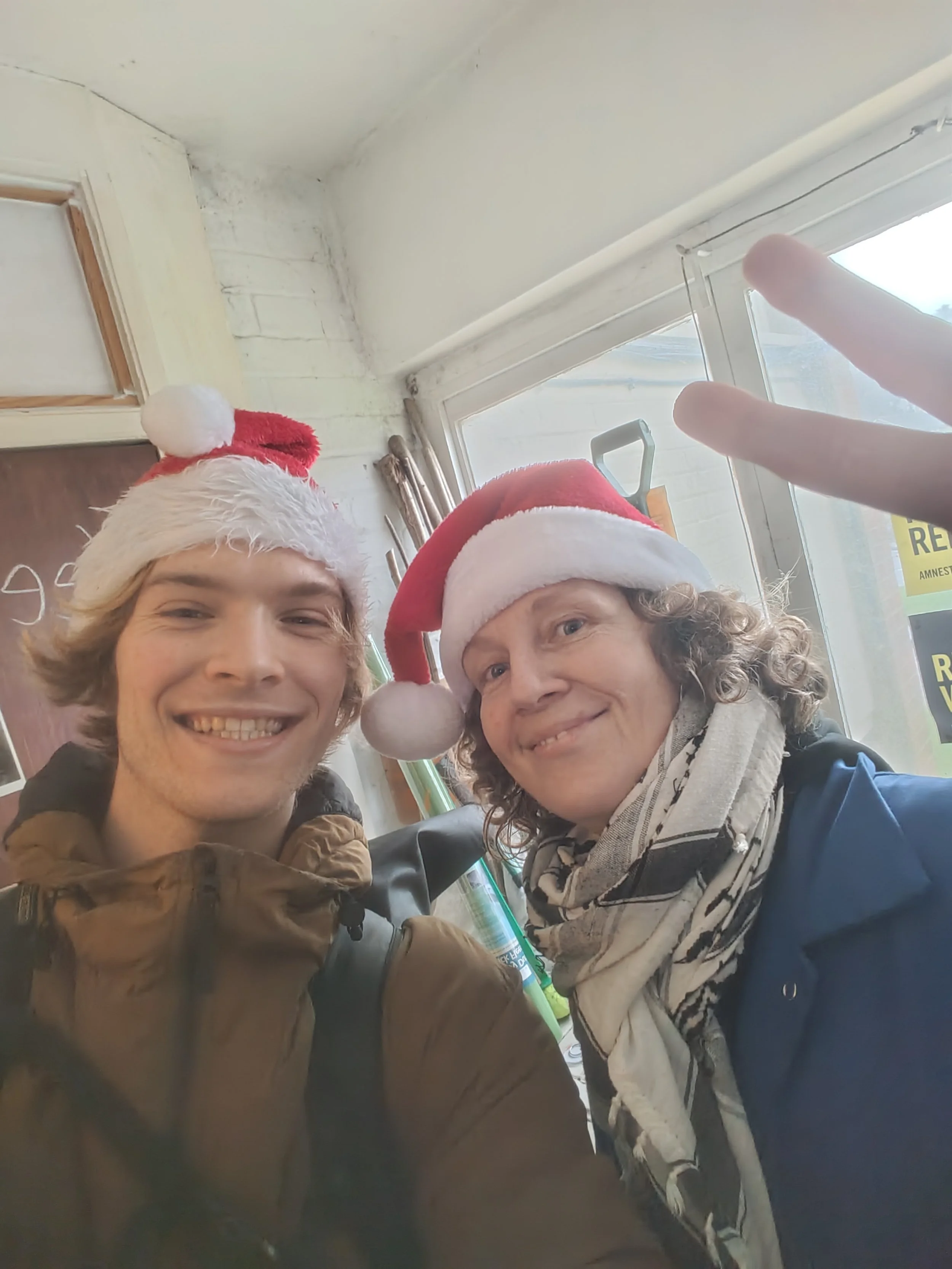
Pictured here with Jools - community arts practitioner, Postcode Revolution member and community organiser and resident on the Bates Estate.
I met Jools just over two years ago, at the community Christmas light ‘switch-on’ at the Community-owned Moulsecoomb pub, The Bevy. I was living close by and Postcode Revolution had existed for only a few months. I was keen to engage with local community building and spread the concept to others. If you watched the video above, you will know that that night was special, as Jools and her neighbour discovered that where they lived used to be a huge orchard.
For me, it was special for a different reason, as Jools pledged to start a Postcode community on Bates Estate.
Called the ‘Mutual Support Group’, the Bates Estate Postcode Community still exists and offers a virtual space (in the form of a WhatsApp group) for support and sharing of tools and other resources. Currently, around 10 houses are in the group, and Jools hopes to bring in the rest of the postcode (approx 50 houses) in 2026.
Alongside this Postcode work, Jools organises a '“Tea & Trees” group who meet once a week on the estate to have tea and tend to the young fruit trees on the estate and connect with one another.
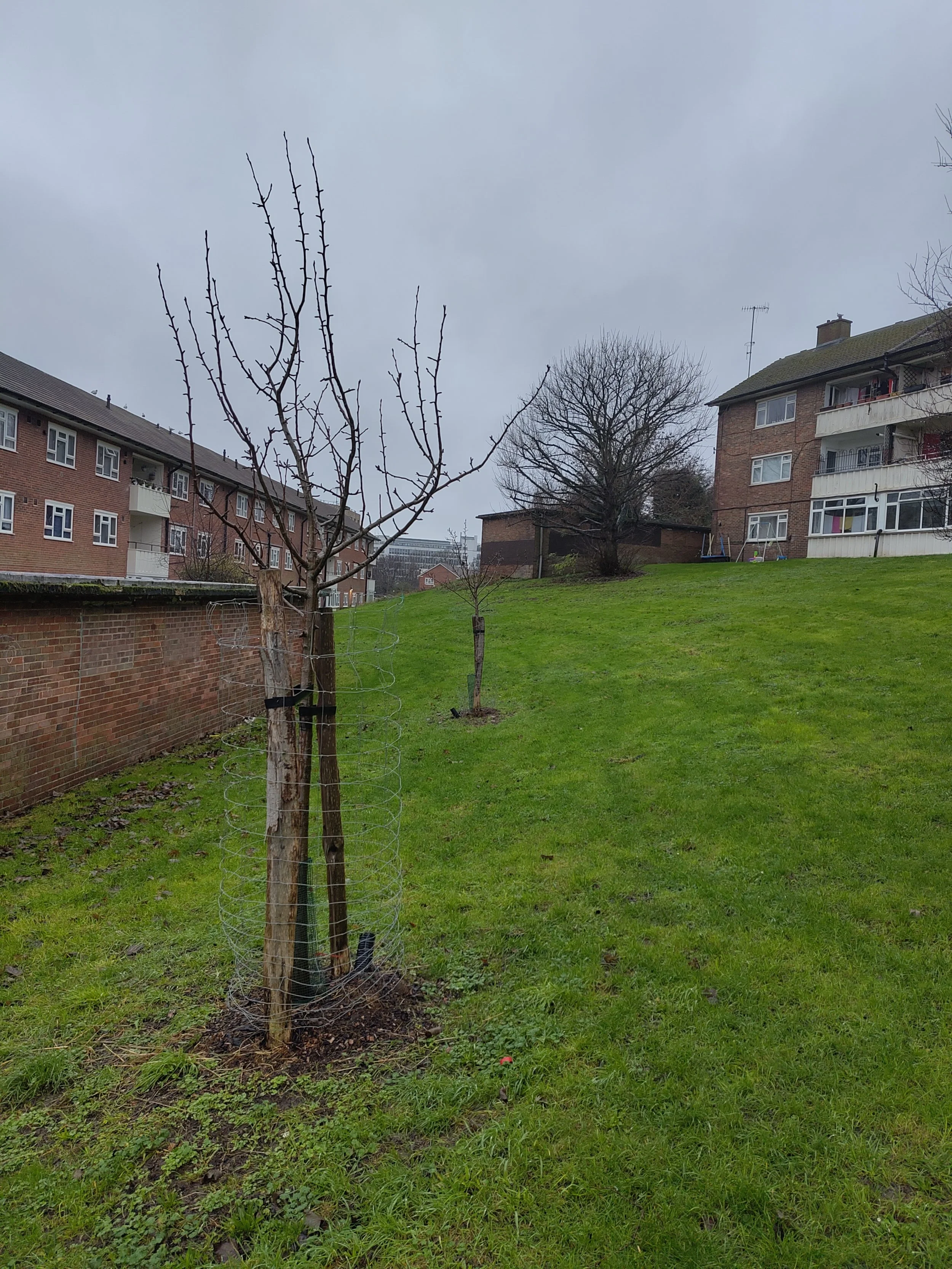
The apple trees on the orchard
The first fruit trees were planted during COVID - residents unable to join the planting due to restrictions and social distancing rules. Brighton Permaculture Trust have supported the planting and maintenance and have played “a hugely important role”, says Jools. “Everyone from Brighton Permaculture Trust has shared invaluable expertise, been so generous with their time and so supportive.” There are plans to plant eight to ten more fruit trees in 2026, and also to create an edible garden area, and much more - at once transforming the community through nature and enhancing local food security in the difficult times to come.
Mr Bates used to complain about the local schoolchildren stealing his apples; Jools does share that the fruit goes very quickly on Bates Estate these days, too. An interesting exception is the medlar tree, which produces a fruit somewhere between a fig and an apple (and does not look so immediately appealing). It fruits in Winter and can be eaten raw, but is typically best when bletted (Jools left her fruit to ripen for two weeks before eating and making into a paste that has enhanced yoghurts, breakfasts, desserts and other things).
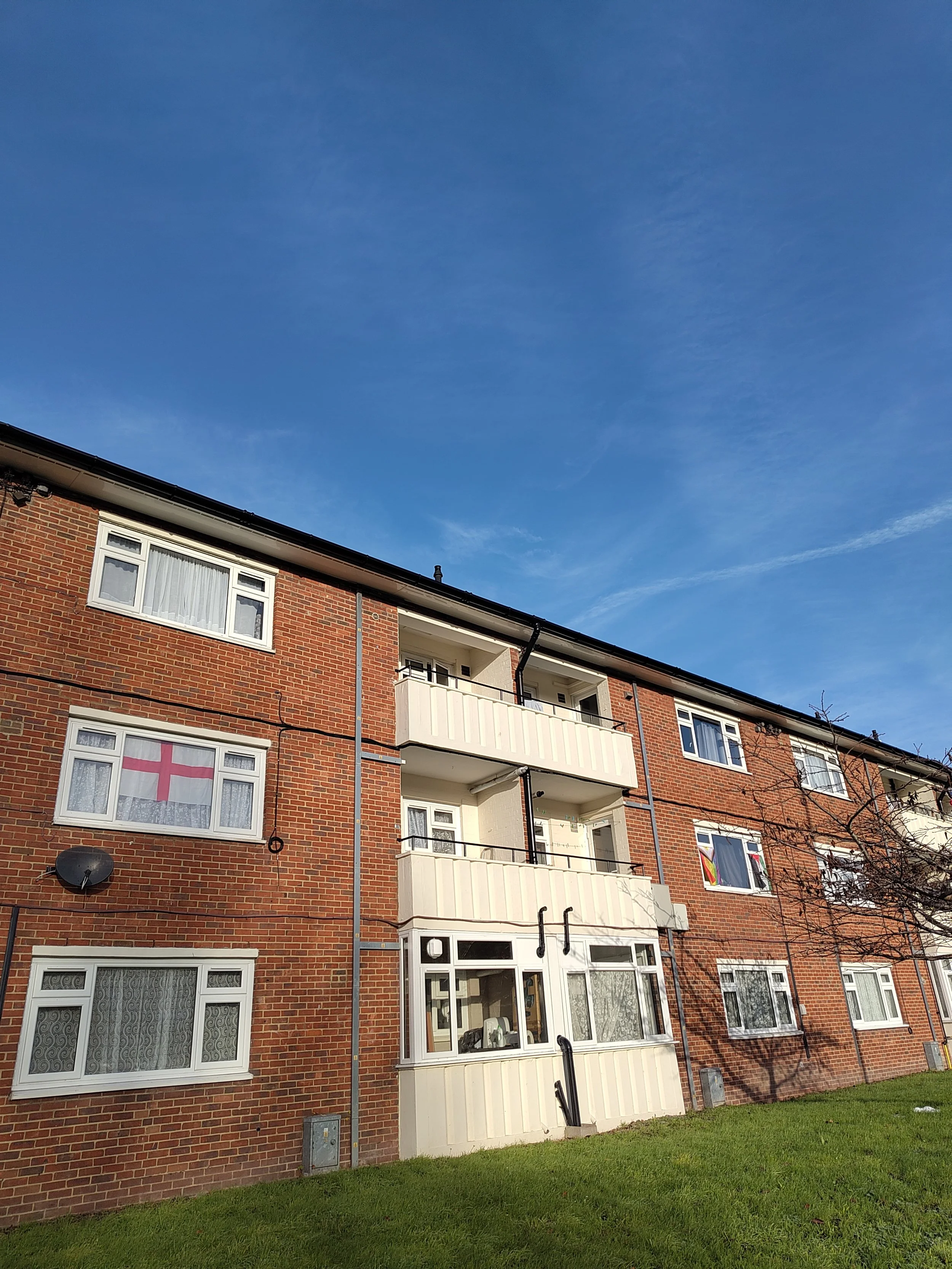
Flags can be seen in the windows of the estate
Like many other areas, Bates Estate saw an increase in the raising of certain flags earlier in 2025. A walk-by sees St George’s flags, Union Jacks alongside Palestine flags, Refugees Welcome cards and Trans Liberation flags. As the video pointed out, the estate historically doesn’t have the best reputation, but I believe is a place ripe for transformative adaptation and a valuable microcosm of the UK as a whole.
There are conversations happening amongst residents about the impact of the St George’s flags on the non-white residents, and Jools believes a few people may have changed their minds and opened up more as a result of these conversations.
On the 18 January, Jools is leading a “wassailing” of the fruit trees on the estate - an old english tradition that involves song, cider and some weeing. This is an englishness that rebukes the flag-bearing kind; it is quieter, embedded in place and the magical traditions which we come from. It’s a way to welcome everyone, through song, story, sharing of food and drink and to celebrate a shared sense of belonging.
A local child - one who’s started to regularly attend the “Tea and Trees” group - recently designed this poster, to be used as a logo for the Bates Estate community. It provides a beautiful image, from a child’s eye, of what’s possible.
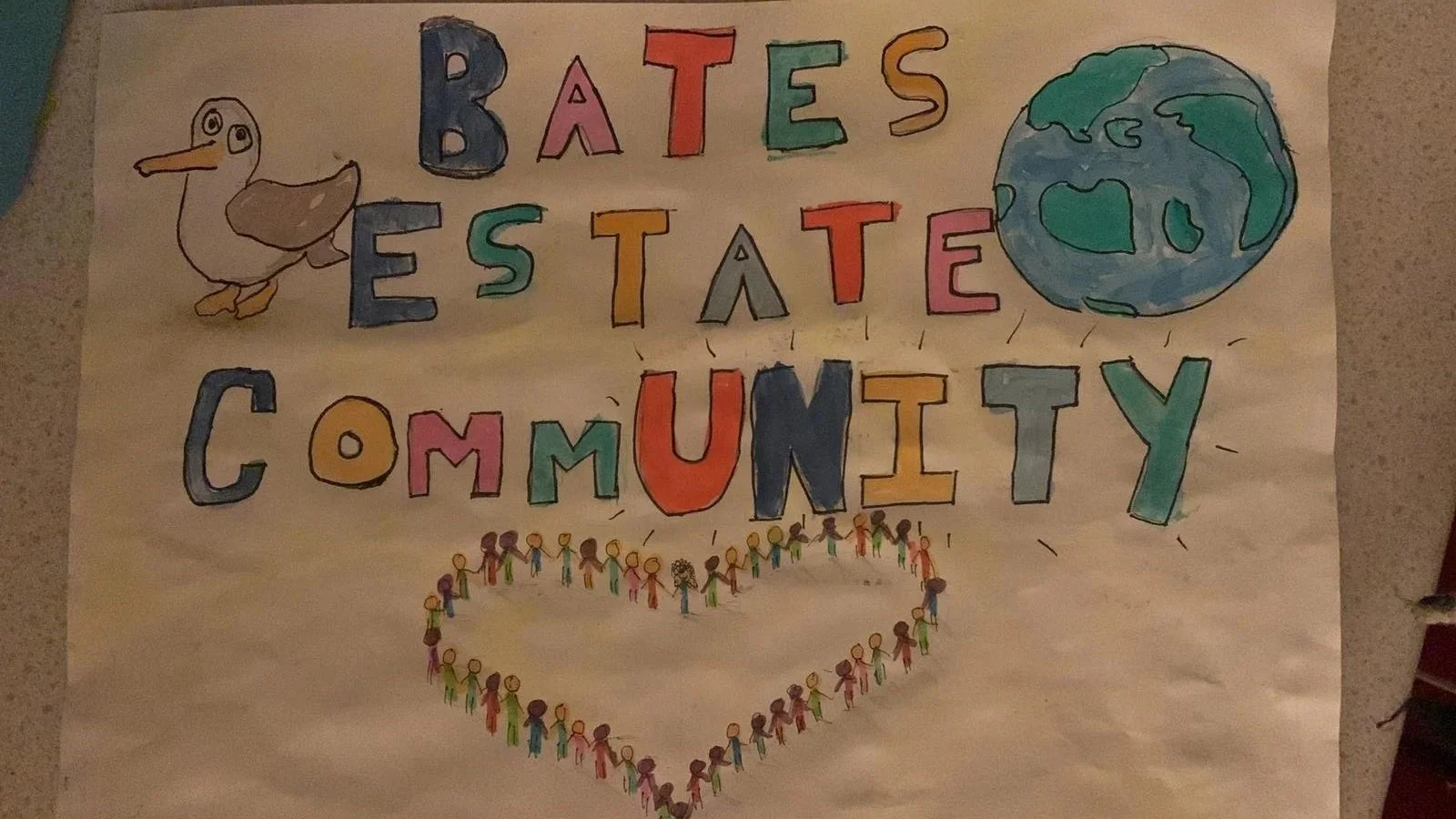
A drawing of a community logo by a child on Bates Estate